No more question marks on Game Day

American football terms explained: Your playbook for all NFL terms

In American football, the technical terms often fly around your ears faster than the players at kick-off. “Interception”, “encroachment” or “audible” – what is part of everyday life for professionals still makes you break out in a sweat? Don’t worry: our glossary is your personal playbook so that you don’t just sit in front of the TV on Sunday evening, but really understand what’s happening on the pitch.

Whether you’re watching the Super Bowl just for the halftime show or want to analyze every play in detail – we’ll explain the most important terms from A to Z. You’ll be an insider in no time at all.

Schnell-Navigation:

A – From Audible to All-Purpose: The start of the playbook

Air Yards

The distance the ball travels through the air on a pass before the receiver catches it. The distance that the player covers on foot after the catch (YAC) is distinguished from this.

All-purpose yardage

The tally for all-rounders: The total sum of all yards of a player from runs, catches and the return of kicks or interceptions in a game.

Audible

The plan change mode: If the quarterback recognizes a weakness in the defense at the line of scrimmage, he changes the actually announced play shortly before the start by shouting (e.g. the famous “Omaha!”).

A-Gap

The gap in the opponent’s line directly to the left or right of the center. For running backs, this is often the most direct, but also the physically hardest way to gain space.

B – Backfield, lightning and the dreaded blind side

Back Judge

Part of the referee team. He stands deep in the backfield of the defense and monitors the correct catching of passes and possible pass interference.

Backfield

The area behind the line of scrimmage. On offense, this is where the quarterbacks and running backs stand; on defense, this area (with cornerbacks and safeties) is often called the “secondary”.
WTS THANKS

Quarterback, fullback, safety… Is your head spinning with all those position names? 👀 Don’t worry! If you want to know more about who actually stands where, take a look at our guide to the football positions here.
Ball Carrier

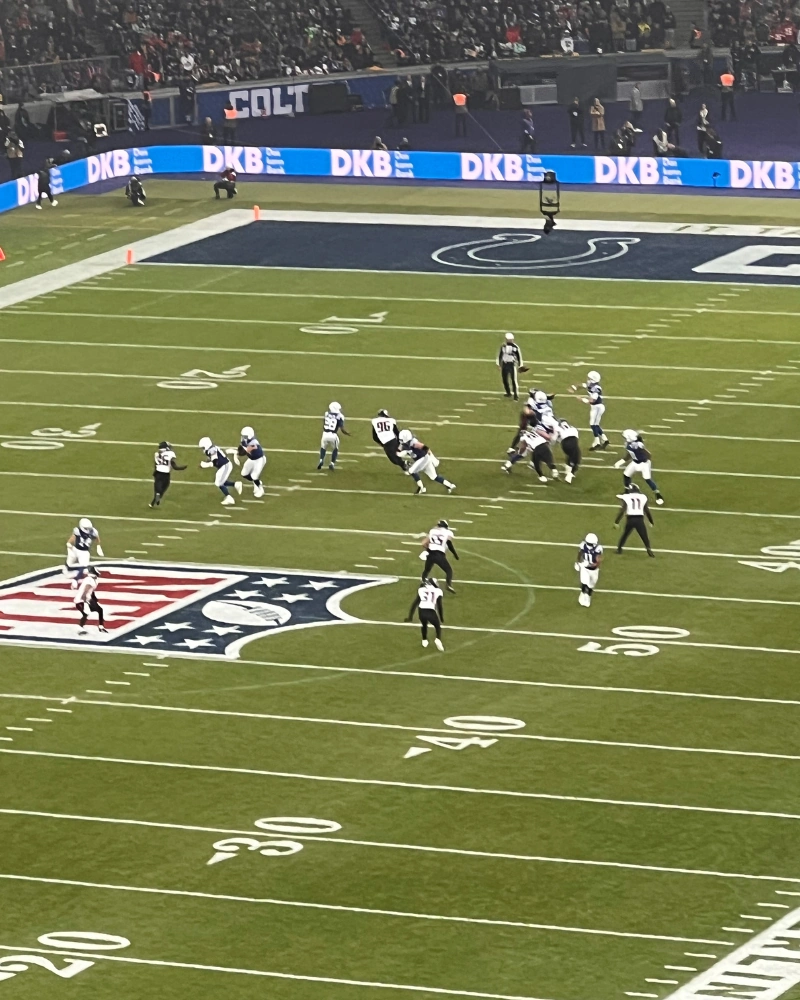
Literally the ball carrier – usually the running back or fullback. His job is to take the ball safely from the quarterback and run into as much space as possible with power or speed.

Black Monday

Probably the most dreaded day for coaches: the first Monday after the end of the regular season, when many teams traditionally sack their head coaches.

Blind Side

The side to which the quarterback turns his back as he lunges (left for right-handed players). A “blind side hit” is particularly dangerous as the playmaker does not see the defender coming.

Lightning

An aggressive defensive play in which additional defenders (often linebackers) rush the quarterback to put pressure on him before he gets rid of the ball.

Block / Blocking

The attempt to push or stop an opponent out of the way to create space for your own ball carrier or to protect the quarterback.

C – Football terms with C

Catch

When a player safely catches and controls the ball. A catch within the field of play is the prerequisite for a complete pass.

Chain Crew

The crew on the sidelines (also known as the “chain gang”), who use a 10-yard chain to mark how far it is until the next first down. In the case of close decisions, they come onto the pitch to take measurements.

Challenge

If a head coach disputes a referee’s decision, he throws his red flag. The scene is then reviewed by video evidence. If he is right, he can keep his challenge.

Checkdown

The quarterback’s “safety option”. If a deep pass is not possible, he throws a short pass to a nearby teammate (usually a running back) to save at least a few yards.

Clipping

A dangerous and illegal block into the opponent’s back below the belt. Strictly punished with a 15-yard penalty.

Clock Management

The art of using playing time strategically. Teams stop the clock (timeouts, spike, out of bounds) or deliberately let it run out to give the opponent no time to counterattack.

Coin Toss

The coin toss before the kick-off. The winner decides whether to attack (offense) or defend (defense) first.

Completion

A successful forward pass that is caught by a teammate without the ball touching the ground. Also known as a “complete pass”.

Conversion

Usually known as a “two-point conversion”: The attempt to score two extra points after a touchdown instead of a kick by making another move into the end zone.

Cornerback

The “shadows” of the wide receivers. These defenders stand on the outside of the line and have the task of preventing or intercepting passes to the receivers.

Crossbar

The crossbar of the field goal frame. The ball must always fly over the crossbar and between the vertical poles during a kick.

D – All about downs, drives and the NFL Draft

Defense

The defense. Their aim is to stop the offense’s attack, prevent them from gaining space and, ideally, regain possession of the ball themselves through turnovers.

Defensive Back

The collective term for the players in the “secondary” (back line of defense), i.e. cornerbacks and safeties. Their main job: preventing passes.

Defensive Line

The tough guys who stand right at the line of scrimmage. They try to put pressure on the quarterback or stop the opposing running back immediately.

Delay of Game

Delay of game. The offense usually has 40 seconds to start the next play. If the clock (play clock) runs out, there is a 5-yard penalty.

Down

A single play or attempt. The offense has four attempts (downs) to gain 10 yards. If it manages this, there is a new first down and four fresh attempts.
WTS-INSIDER

The fourth down is the moment of decision: Since you lose the ball to the opponent if you fail on the spot, this is usually where you kick (punt) to drive the opponent far back. Only those who are brave “go for it”!

Draft

The annual event where NFL teams select the best talent from college. The weakest team from the previous season usually gets first pick.

Drive

A continuous series of plays by an offense. A drive only ends when the team scores, passes the ball on a punt or a missed pass is intercepted.

Drop kick

A rare kick variant in which the ball must first touch the ground before it is kicked. Counts as much as a normal field goal (3 points) if successful.

E – for end zone, extra points and encroachment

Ejection

The sending off in football. Players are sent off by the referee for particularly serious fouls, assault or unsportsmanlike conduct.

Eligible Receiver

“Eligible pass receivers”: In the offense, only certain players (receivers, tight ends, running backs) may catch forward passes. The players of the offensive line are excluded from this.

Encroachment

A foul by the defense: A defender crosses the line before the snap and touches an opponent. The penalty is 5 yards.

End zone

The target area at both ends of the field. To score a touchdown, the ball must be carried into this area or caught there.

Extra point (PAT)

After a touchdown, the team can kick the ball through the goalposts. This “point after touchdown” counts as one point. The risky alternative is the two-point conversion.

F – Of flags, field goals and fumbles

Face Mask

Refers to the protective grille on the helmet. If a player reaches into the grille and pulls on it, this is a foul (15-yard penalty). Brief contact is permitted – grabbing is prohibited.

Fair Catch

The returner waves his arm over his head before making the catch. He is signaling: I catch the ball, but do not run. He may then not be tackled. However, if he drops the ball (“muff”), it is free for everyone.

False start

A false start by the offense: If a player moves before the snap and fakes the start of the play. The penalty is 5 yards.

Field Goal

The kick through the goalposts scores 3 points. The ball is usually fixed on the ground by the “holder” for the kicker.

Flag

The referees throw small yellow flags onto the field to indicate a foul. Coaches, on the other hand, throw red flags for a challenge.

Franchise Day

A tool for teams to retain a top player with an expiring contract for another year if they cannot agree on a new contract.

Free Agent

A player without a contract. He is “free” on the market and can negotiate with any team.

Fumble

Every offense’s nightmare: the ball carrier loses control of the ball before his knee or elbow touches the ground. The ball is then “free” and can be recovered by either team (fumble recovery).

G – Gridiron, Goal Line and the “Yellow Line”

Game Clock

The official stadium clock. It shows how much time is left to play in each quarter. Not to be confused with the play clock, which sets the time limit for each individual move.

Gap

The gap between two players in the offensive line. The defense tries to break through these gaps while the offense blocks them for their running backs.

Yellow Line

A purely visual aid for TV viewers. It marks the spot that the offense must reach in order to achieve a new first down. This line cannot be seen in the stadium itself.

Goal Line

The front boundary of the end zone. If the ball crosses this line in the hands of a player (or even just touches it briefly), this counts as a touchdown.

Goal Post

The goalposts at the end of each end zone. Consists of the crossbar and the two uprights through which the ball must pass when kicked.

Gridiron

The nickname for the football pitch. It is derived from the grid-like pattern formed by the lines on the pitch.

Gunner

The sprinters of the special teams. Their job is to chase forward as quickly as possible after a punt in order to stop the opposing returner immediately.
H – From the Hail Mary to the Huddle

Hail Mary

A long desperation pass into the end zone shortly before the end of the game. It is considered the epitome of a football miracle, as the chance of success is extremely low.
WTS-INSIDER

Where does the name come from? In 1975, Cowboys quarterback Roger Staubach threw the decisive touchdown against the Vikings shortly before the end of the game. After the game, he said: “I closed my eyes and prayed a Hail Mary.” The play has borne this name ever since.

Halftime

The 12-minute halftime break. At the Super Bowl, it often lasts over 30 minutes due to the elaborate halftime show.

Handoff

The direct transfer of the ball from hand to hand (usually from quarterback to running back) without the ball flying through the air.

Hashmarks

The small marking lines on the field. They divide the playing field lengthwise. The ball is always placed on or between these lines for the next move.

Holder

The player who holds the ball on the ground for the kicker on a field goal attempt. The backup quarterback or punter usually takes over this job.

Holding

A foul in which a player is held or clutched. The offense is penalized 10 yards, the defense 5 yards and an automatic first down.

Horse Collar Tackle

A dangerous foul in which a defender pulls an opponent to the ground from behind by the collar or shoulder pad. Prohibited due to the high risk of injury (15-yard penalty).

Huddle

The brief gathering of players on the field to discuss the next play. If the offense foregoes this to save time, it is called a “no-huddle”.

I – Interceptions, formations and incomplete passes

I-formation

A classic formation of the offense, with quarterback, fullback and running back directly behind each other. Viewed from above, this line looks like the letter “I”.

Illegal Formation

A formation error: The offense must have at least seven players directly on the line of scrimmage at the snap. If this is not the case, there is a 5-yard penalty.
WTS-INSIDER

Why is there an Illegal Formation? So that the offense can’t cheat by pulling all the players far back to confuse the defense. There must be order!

Illegal Motion

A foul before the start: A player (“man in motion”) may move before the snap, but only parallel to the line. If he runs forward instead, it is illegal motion (5-yard penalty).

Inbounds

Within the playing area. Particularly important when catching a pass on the edge: A catch only counts as complete if the player lands “inbounds” with both feet while controlling the ball.

Incomplete Pass

A forward pass that touches the ground before being caught in a controlled manner. The move ends immediately, the clock stops and no space is gained.

Injury Reserve (IR)

The “injured list”. Players who have suffered serious injuries are placed on this list to make room in the squad for fit players.

Intentional Grounding

A foul by the quarterback: He intentionally throws the ball away without a target just to avoid a sack. Penalty: Loss of space and loss of down.
WTS-INSIDER

The quarterback may only throw the ball away without penalty (“throw away”) if he is outside the pocket (the protective area of the O-line) and the ball reaches at least the line of scrimmage.

Interception

The moment when the defense becomes the attacker: A defender intercepts the opposing quarterback’s pass out of the air. The ball changes hands immediately (turnover).

J – Jukes and the art of deception

Juke

A quick, often jerky deceptive movement by the ball carrier to avoid a tackle by the defender. A perfectly executed juke literally lets the opponent run into space [cite: 594, 595, 596].

Jersey

The players’ jerseys. In football, these are extremely tear-resistant and tightly cut to make it harder for defenders to hold on to the ball carrier [cite: 597, 598].
WTS-INSIDER

Did you know? You can usually tell the role by the number: quarterbacks often wear 1-19, while the heavy guys on the offensive line usually have numbers between 50 and 79. So you know immediately who is who!

K – Kickers, kick-offs and the knee

Foosball table

The specialist for resting balls. He takes the kick-offs at the start of the half and is responsible for field goals and extra points. Often the player with the most pressure in the game.

Kick-off

The kick-off at the beginning of each half or after a score. The ball is kicked from the 35-yard line deep into the opponent’s half. The opponent tries to kick the ball back as far as possible.
WTS-INSIDER

If the ball is kicked through the opponent’s end zone or kneel down by the returner, this is called a touchback. The offense then automatically starts at its own 30-yard line (in the NFL).

Kneel Down

The quarterback kneeling down directly after the snap. It ends the play immediately without the risk of losing the ball. Teams use this in the “Victory Formation” to let the clock run down safely at the end of the game.
WTS-GEDANKE

The kneel down is the sportiest way to say: “The game is over, we’ve won.” It prevents unnecessary injuries and time stops just before the final whistle.

L – Line of scrimmage and the heavyweights

Lateral Pass

A pass that is thrown sideways or backwards. In contrast to a forward pass, a lateral can be thrown as often as desired per play. Important: If a lateral falls to the ground, it is considered a fumble and not an incomplete pass – the ball therefore remains “live”.

Line of Scrimmage (LoS)

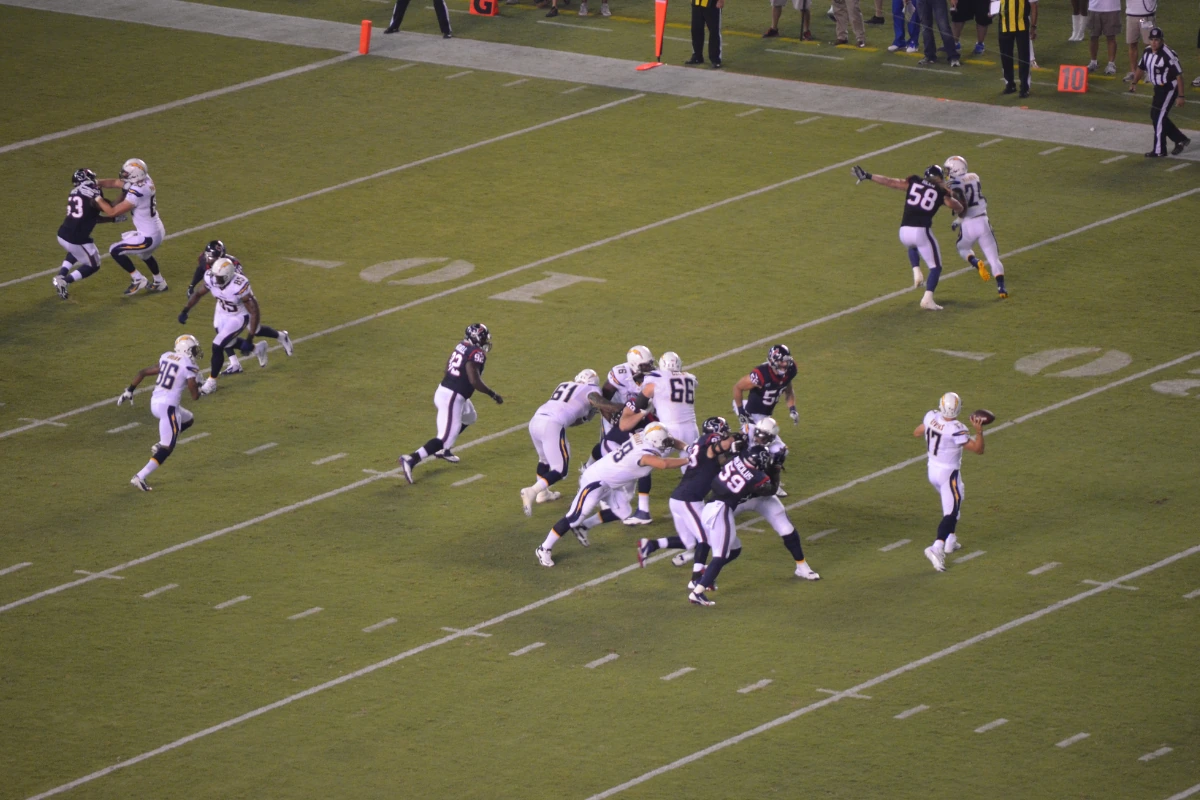
The imaginary line on which the ball lies and at which the teams face each other before the snap. The quarterback may only throw a forward pass as long as he is behind this line. No player may cross this line before the snap.

Linebacker

The central defenders, who are positioned directly behind the defensive line. They are the all-rounders of the defense and have to stop powerful runs as well as cover fast pass receivers.
WTS-INSIDER

The middle linebacker is often referred to as the “quarterback of the defense”. He reads the opponent’s formation and gives his teammates tactical instructions before the snap.

Long Snapper

A specialist center who throws the ball precisely backwards through his legs over a long distance for punts or field goals.

Loose ball

A ball that is not under the control of a player – for example after a fumble. It is free and can be recovered by any team.

M – Man Coverage, Muff and the “Mike”

Man in Motion

A player in the offense who is allowed to move parallel to the line of scrimmage before the snap. This serves to confuse the opposing defense or to read their tactics ahead of time.

Man-to-man coverage

The classic man-to-man defense: Each defender is assigned a fixed opponent whom he pursues across the field to prevent him from catching the ball.

Max Protection

Maximum protection for the quarterback: In addition to the O-line, running backs or tight ends are left behind to block. This gives the QB more time, but fewer pass receivers.

Mike

The term for the middle linebacker. He is often the leader of the defense and is loudly identified by the quarterback before the snap to clarify blocking responsibilities.

Muff

A mistake when catching the ball, usually on a punt or kickoff. The player touches the ball while attempting to catch it, but immediately loses control. A “muff” clears the ball for both teams.

N – Neutral Zone and No-Huddle

Neutral zone

The neutral zone is the area between offense and defense before the snap, the width of which corresponds to the length of the football (1 yard). No player may enter this zone before the play – the only exception is the center (snapper), who may touch the ball.

Neutral Zone Infraction

A foul by the defense: A defender enters the neutral zone before the snap and provokes a reaction (a false start) by the offense. This is penalized with a 5-yard penalty and the play is immediately interrupted.

Nickel defense

A defensive formation in which five instead of the usual four defensive backs are on the field. This formation is usually chosen to better defend against an opponent’s passing attack.

No-Huddle

A tactic in which the offense forgoes the huddle and plays one play after the other. This serves to put the defense under time pressure, prevent them from making substitutions or simply take them by surprise.

O – Offense, offside and onside kick

Off-Season

The period after the Super Bowl (February) until the start of the pre-season in August.

Offense

The attacking team of a team.

Offside

Offside in football: A player moves beyond the line of scrimmage at the snap.

Onside Kick

A deliberately short kick-off to regain possession of the ball immediately. The ball must travel at least ten yards before it can be secured.
WTS-INSIDER

Since 2024, an onside kick in the NFL may only be performed in the 4th quarter and must be announced in advance. Surprise kicks no longer exist!

Outside Receiver

Wide receivers positioned closest to the sidelines.

Out of Bounds

The area outside the playing field. A player is considered “out of bounds” as soon as he touches the white boundary line.

P – From pass interference to the punt

Pass Interference

Illegally obstructing an opponent in an attempt to catch the ball without actively reaching for it.

Pass route

The precisely rehearsed route of a receiver to run free for the quarterback’s pass.

Pick Six

A term for an interception that is returned by the defense directly for a touchdown.
WTS-GEDANKE

Why pick six? “Pick” colloquially stands for the interception (plucking the ball out of the air) and “six” for the six points of the touchdown.

Play Action

A deceptive maneuver in which the quarterback fakes handing the ball off to the running back only to throw a pass after all.

Playbook

The “tactics book” of a team. It contains all the moves and routes that the players need to memorize.

Pocket

The “pocket”: The protective space that the offensive line forms around the quarterback to give him time for the pass.

Punt

If the first down is not achieved after three attempts, the punter kicks the ball directly from his hand far into the opponent’s half on the fourth attempt to give the ball away.

Pylon

Orange foam markers at the corners of the end zone. If the ball carrier touches a pylon with the ball, this counts as a touchdown.

Q – The quarterback and his quarters

Quarter

A football game is divided into four quarters, each with a net playing time of 15 minutes.

Quarterback (QB)

The leader of the offense. He distributes the balls by pass or hand-off and calls the plays. He is in direct contact with the coaches via radio.

Quarterback rating

A statistical formula that makes the passing performance (success rate, touchdowns, interceptions) of a quarterback comparable in a single number.

Quarterback sack

When the defense brings the quarterback down behind the line of scrimmage before he can throw the ball. This leads to a considerable loss of space.

Quarterback sneak

A short running play in which the quarterback takes the ball directly after the snap and pushes forward behind his O-line. Ideal for very short distances to the first down.

WTS-INSIDER

Probably the most famous sneak of modern times is the “Tush Push”: the quarterback is also pushed forward from behind by his teammates in order to force the necessary centimetres.

Quick Count

The quarterback starts the play particularly quickly to give the defense no time for substitutions or tactical adjustments.

R – Red Zone, Running Backs and RPOs

RAC (Run after Catch)

The yards a pass receiver runs after catching the ball until the end of the play.

Read option

A running play in which the quarterback “reads” the reaction of a defender and only decides at the last moment whether to hand the ball to the running back or run himself.

Red Zone

The area between the opponent’s 20-yard line and the end zone. Statistically important, as the chance of scoring points is highest here.

Regular Season

The main round of the NFL. Each team plays 17 games to qualify for the playoffs.

Returner

The player who catches punts or kick-offs and tries to return the ball as far as possible.

Reverse

A trick play: The running back runs in one direction and hands the ball to an oncoming receiver to take the defense by surprise.

Roughing the Passer / Kicker

A foul: An unfair or delayed tackle on the quarterback or kicker after the ball is already gone. Penalty: 15 yards and automatic first down.

RPO (Run-Pass-Option)

An ultra-modern play in which the quarterback decides whether to hand the ball off (run) or immediately throw a pass, depending on the behavior of the defense.

WTS-INSIDER

The difference: With the read option, the QB chooses between two running routes. With the RPO, he decides between run and pass. This is almost impossible for the defense to defend!

Running Back

The primary ball carrier of the offense. His job is to find gaps in the defense and gain space.
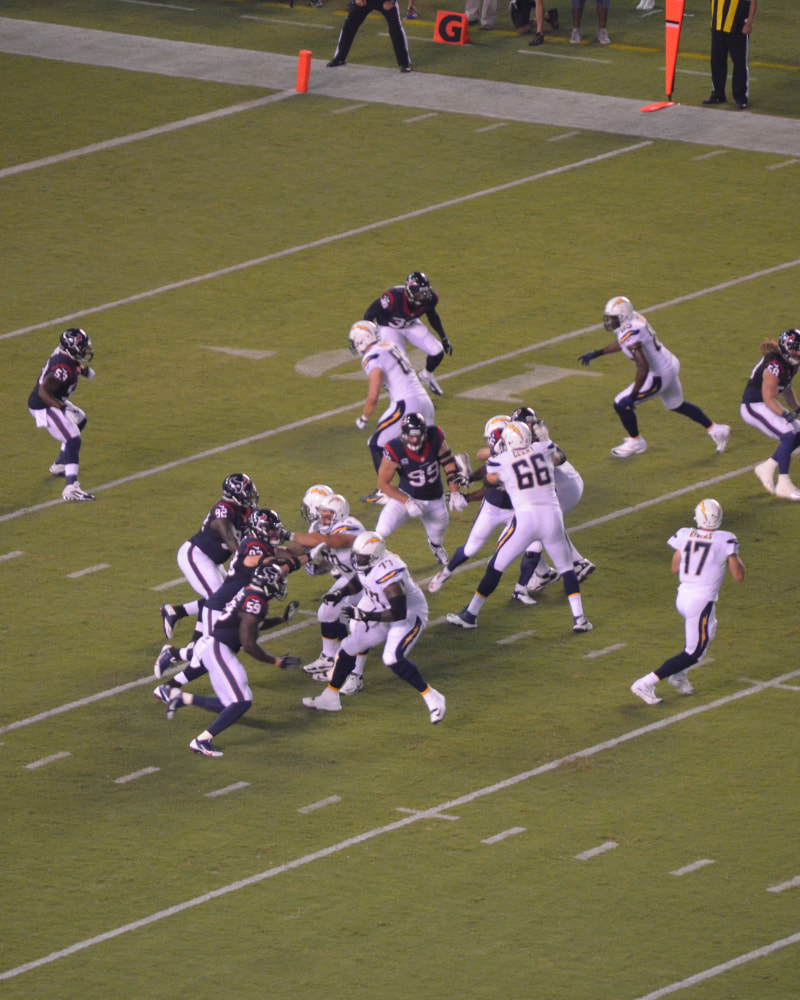
S – From sack to special team

Sack

The defense brings the quarterback to the ground behind the line of scrimmage before he can throw the ball. This leads to a loss of space and the loss of an attempt (down).

Safety

In football, this term has two completely different meanings: 1. the play (points): A rare scoring play for the defense (2 points). It occurs when the ball carrier is tackled in his own end zone or the offense commits a foul there. 2. the position (player): The backmost defenders (“free safety” and “strong safety”). They act as the last line of defense against long passes and deep runs.

Salary Cap

The annual salary cap per team to maintain a level playing field in the NFL.

Scramble

An unplanned run by the quarterback. If there is no free pass receiver or the pressure from the defense is too great, the QB leaves the pocket and tries to run himself.

Screen Pass

A short pass behind the line of scrimmage to a receiver who is protected by a wall of blockers.

Shotgun

A formation in which the quarterback stands about 5-7 yards behind the center in order to have more overview and time for the pass.

Slide

The quarterback slides to the ground feet first. He voluntarily gives up the play and may no longer be tackled from this moment on (protection rule).

Snap

The ball is passed through the center’s legs to start each play. For kicks or punts, the ball is thrown over a greater distance (long snap).

Special Teams

The third unit alongside offense and defense. These specialists only come onto the field for kicks, punts and field goals.
WTS-GEDANKE

Never underestimate the special teams! They often decide the field position and can single-handedly turn a game around with blocked punts or long returns.

Spike

The quarterback immediately throws the ball to the ground to stop the clock. Costs a try, but saves an important time-out.
WTS-INSIDER

The spike is technically considered an incomplete pass. Therefore, the clock stops, just like with a missed pass in the direction of a receiver.

Stiff arm

The ball carrier pushes a defender away with his outstretched arm to prevent a tackle and keep his distance.

Strong Side

The side of the offense on which the tight end lines up or on which there are numerically more attackers.

T – Touchdowns, turnovers and technique

Tackle

Stopping an opponent in accordance with the rules by bringing him to the ground or pushing him to the side.

Tackle Box

The area between the outside shoulders of the offensive tackles. Within this zone, the QB may not simply throw the ball away to avoid a sack.

Third and Long

A third attempt that is still a long distance (usually 7+ yards) short of a first down. In this situation, the offense almost always resorts to the pass play.

Three-and-Out

A nightmare for any offense: when you don’t get a single first down on your first drive and have to punt again after three plays.

Three-Point Stance

The starting position of a lineman: Both feet and one hand touch the ground.

Throwaway

The quarterback deliberately throws the ball out of bounds to prevent a sack. This is only allowed outside the tackle box.

Tight end

A hybrid player who stands right next to the O-line. He acts as both a strong blocker and a dangerous pass receiver.

Time-out

Interruption of the game at the request of a team. Each team has three time-outs per half.

Touchback

The ball lands in the end zone at kickoff/punt or is kneed there. The game then starts at a fixed line (usually the 30-yard line).

Touchdown

The most important score (6 points). The ball must cross the goal line or be caught in the end zone.

Tripping

A foul: An attempt to stop an opponent by tripping. Punished with a 10-yard penalty.

Turnover (takeaway)

The loss of possession due to an interception, fumble or a failed fourth down (turnover on downs).
WTS-INSIDER statistics check: Teams that win the turnover duel win over 75% of their games. Possession is the most valuable currency in football!

Two-Minute-Warning

An automatic time-out exactly two minutes before the end of each half.

Two-point conversion

The attempt to make a play for 2 additional points in the end zone after a touchdown instead of a kick.

U – Umpires and unsportsmanlike conduct

Umpire

A member of the referee team. He stands about 5 yards behind the line of scrimmage on the defense side and primarily monitors the action at the line (blocking, line fouls).

Under Center

The quarterback lines up directly behind the center and receives the ball directly from the center’s hands at the snap.

Unnecessary Roughness

Unnecessary roughness: A foul for actions that go beyond the normal course of play, such as tackles well after the whistle. Penalty: 15 yards.

Unsportsmanlike Conduct

Unsportsmanlike conduct: Includes insults, taunting opponents, or removing helmets on the field. Penalty: 15 yards.
WTS-INSIDER

Two “Unsportsmanlike Conduct” penalties against the same player result in automatic ejection from the game in the NFL.

Uprights

The vertical goal poles of the field goal frame. The ball must be kicked between these poles and over the crossbar.

V – Of winning formations and trophies

Vanilla offense/defense

Term for a very simple, ordinary game scheme without any tactical tricks. Teams usually use “vanilla” tactics in the preseason to keep their true moves secret from the competition.

Victory Formation

The formation at the end of the game when the leading team just wants to run out the clock in a controlled manner. The quarterback simply kneels down (see kneel-down).

Vince Lombardi Trophy

The official trophy for the winner of the Super Bowl. Named after the legendary coach of the Green Bay Packers, who won the first two Super Bowls in history.

WTS-INSIDER

The trophy is handmade from sterling silver by Tiffany & Co. every year. Unlike challenge cups, the winning team gets to keep this $25,000 piece of jewelry.

W – Wide Receiver and Wild Cards

Waiver Wire

An internal NFL system that allows teams to sign players who have been released by other teams.

Weak Side

The “weak” side of the formation: The side on which there is no tight end or fewer players in the offense.

West Coast Offense

A tactical philosophy based on short, precise passes and running routes. The aim is to gain space through timing and “yards after the catch” (YAC).

Wide Receiver (WR)

The main passing stations for the passing game. They usually position themselves far out on the sidelines to extend the width of the pitch.

Wild Card

Additional places for the playoffs: These go to the best teams in a conference that were unable to win their own division.

WTS THANKS

The Wild Card Weekend opens the playoffs. As it’s “all or nothing” here, these games are often among the most exciting of the entire season.

Y – Yards and youngsters

YAC (Yards after Catch / Contact)

This term is used twice in football:

1. yards after catch: The additional distance a receiver travels after the catch.

2. yards after contact: The yards a ball carrier gains after being touched or hit by the first defender.

Yards

The unit of measurement in football (1 yard ≈ 0.91 meters). A pitch is 100 yards long; all penalties and space gains are measured in yards.

Yards from scrimmage

The total amount of yards a player has gained by running and passing plays from the line of scrimmage. Returns (e.g. after kicks) are not counted here.

WTS THANKS

While yards after catch show the speed of a player, yards after contact are the measure of the pure power of a running back.

X – The X position

X-Receiver

The tactical term for the “split end”. This wide receiver stands directly at the line of scrimmage, usually on the side opposite the tight end.
WTS-Insider

In playbooks, the receivers are often simply called X, Y and Z. The X receiver is usually the physically strongest player, as he is immediately pressured by the defender at the line (press coverage).

Z – Zone Defense and home stretch

Zone Defense

Spatial coverage: In contrast to man coverage, defenders do not cover fixed opponents, but are responsible for a specific area (zone) on the pitch.
WTS idea

The advantage of the zone defense? The defenders usually have the quarterback in sight and can react faster to passes or make interceptions.

American football may seem like a foreign language at first, but once you have internalized the terms, you will discover the fascinating tactical depth of this sport. With this glossary, you’ll be well equipped for the next watch party or the next Super Bowl.

Have fun watching – and remember: every yard counts!

Frequently asked questions about the football lexicon (FAQ)

What terms do football beginners need to know?

To understand a game fundamentally, you should focus on these four terms:

  • Touchdown: The most important score (6 points) when the ball enters the end zone.
  • First Down: The offense has 4 attempts to cover 10 yards. If it manages to do so, there is a "first down" (a new first attempt).
  • Quarterback: The playmaker who calls the plays and distributes the ball.
  • Line of scrimmage: The imaginary line at which the teams face each other before each play.

Leave a Reply

Your email address will not be published. Required fields are marked *