American Football Explained Simply

American Football Guide: How to Understand the Super Bowl (Part 1)

So. American Football.

On February 8th, 2026, the time will come again: the world-famous Super Bowl is just around the corner. Everyone has heard of it, and millions will tune in. But what is it actually all about? Who is playing, and what are the basic rules of American Football? Whether you want to join the conversation at work, shine at a Super Bowl party, or do more than just analyze Bad Bunny’s halftime show, you’ve come to the right place.

Super Bowl 2026: The Clash of Giants on February 8th

Who is actually facing off? To understand this, we need to look at the bigger picture. The Super Bowl determines the champion of the NFL (National Football League). It is the grand finale of the past season, crowning the American champion.

AFC vs. NFC – Who Represents the Conferences in the Final?

The NFL is divided into two groups, known as Conferences: the AFC and the NFC. Each conference sends one representative to the Super Bowl. This spot is earned within their respective groups. The regular season consists of 17 games (over 18 weeks, with one “bye week” off for each team). After that, the top 7 teams from each conference enter the Playoffs (the post-season tournament) to determine the conference champion.

This year, the Seattle Seahawks represent the NFC, and the New England Patriots represent the AFC. The Playoffs are played in a knockout format, similar to the FIFA World Cup. There are quarter-finals and semi-finals leading up to the conference championship, which decides the Super Bowl participants. Looking at the league as a whole, it’s essentially a round-of-16 bracket.

Why Are There So Many Interruptions?

“I don’t get the rules! It just looks like a bunch of people pushing each other, followed by endless commercials.”

You’re not wrong about the breaks. American audiences tend to prefer sports with frequent pauses. It allows the focus to be concentrated on short, high-intensity sequences without requiring a constant attention span. This is one reason why sports like soccer have historically struggled to gain the same traction in the US. Of course, more breaks also mean more advertising slots and higher revenue—the cherry on top for broadcasters.

Our Tip: If you are watching in Germany, try the RTL broadcast. They generally have fewer commercial breaks than US networks, and the commentators do a great job of explaining the rules to newcomers.

American Football Rules: The 101 for Your Watch Party

Speaking of rules… let’s keep it simple. Here is the basic breakdown:

Understanding the Field

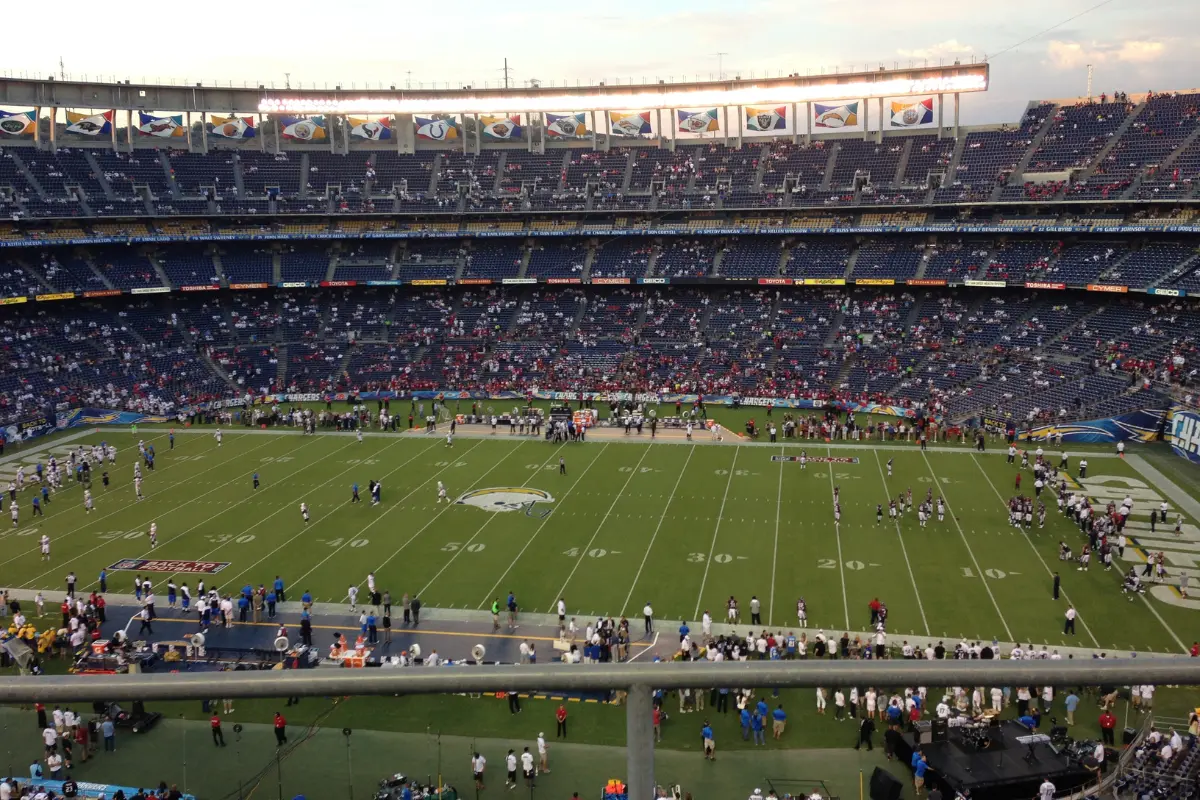
The field is 120 yards long. One yard is approximately 91 cm (just under a meter). A team’s goal is to move the ball into the opponent’s End Zone, which occupies the last 10 yards on each side. Since each team has a 10-yard End Zone, the actual field of play is 100 yards long—roughly the length of a soccer pitch. To reach the goal, a team can either run with the ball or pass it—though passing forward is usually only allowed once per play.

The 10-Yard Goal

The attacking team (the Offense) has 4 attempts (downs) to move the ball forward at least 10 yards. Every time they achieve this, they earn a First Down and receive a fresh set of 4 attempts. If they fail to make 10 yards, the ball is handed over to the opposing team, who then starts their own attack with 4 attempts. This is also why teams are so large: there are specialized players for the Offense and the Defense. We will dive deeper into this in a future post.

Scoring Points: Touchdowns, Field Goals, and Extra Points

If the Offense successfully moves the ball from their starting position into the opponent’s End Zone, it’s a Touchdown.

The Touchdown

A Touchdown is worth 6 points, but that score usually increases to 7 or 8. Immediately after a Touchdown, the team has the chance to score again. They can either kick the ball through the uprights for 1 Extra Point (PAT) or try to reach the End Zone again from a short distance for 2 Extra Points (Two-Point Conversion). They only get one attempt for this. In most cases, teams choose the kick, which is why a “Touchdown Drive” usually results in 7 points.

Field Goal: When Do They Kick?

From roughly the middle of the field (usually starting 40 yards away from the opponent’s End Zone), the Offense can opt to kick a Field Goal. The ball must be kicked over the crossbar and between the two goalposts. This is worth 3 points. While there are other niche ways to score, most scores consist of either 3 or 7 points.

Strategic Retreat: Why Do They Kick the Ball Away?

Sometimes you’ll see a team just kick the ball to the other side. This is called a Punt. The Offense chooses to give up possession if they don’t believe they can make the 10 yards on their 4th attempt. This usually happens when they are too far away for a Field Goal but still have a few yards left to reach the First Down marker. By punting, they kick the ball deep into the opponent’s territory, making it much harder for the other team to reach the opposite End Zone.
Guest Post by 49 Bills Drive

At 49 Bills Drive, a Buffalo Bills fan shares his perspective on the NFL and his team. Easy to understand, free of overly technical jargon, but always full of joy and passion.
He shares his football knowledge here on what the sports.

Leave a Reply

Your email address will not be published. Required fields are marked *