You’re watching a basketball game for the first time, and you see different timers counting down. A player drives to the hoop, shoots, and – BUZZER – too late. But why doesn’t the basket count?
We’ll explain how the shot clock works and what it means for the rules of the game.
What is the Shot Clock, anyway?
The shot clock essentially regulates how much time a team has to attempt a shot at the basket.
Imagine a team simply keeping the ball and passing it endlessly between members without ever shooting—just to make sure the other team doesn’t get a chance to score. (Does that remind anyone of gym class? 👀).
Sounds pretty boring, right? That’s exactly what used to happen in professional basketball, which is why the shot clock was introduced.
The shot clock shows the time remaining for an possession – not the remaining game time.
In the NBA, the Basketball Bundesliga (BBL), and most international leagues, teams have exactly 24 seconds to attempt a shot. This shot must at least touch the rim—otherwise, it’s a turnover. In US college basketball (NCAA), the limit is 30 seconds.
Whenever play stops (e.g., due to a foul), the clock stops. Sometimes the shot clock runs a bit too long by mistake; in these cases, officials add the seconds back and “reset” the clock.
Where can I find the Shot Clock?
Depending on how large and modern the arena is, you can find the shot clock in several places:
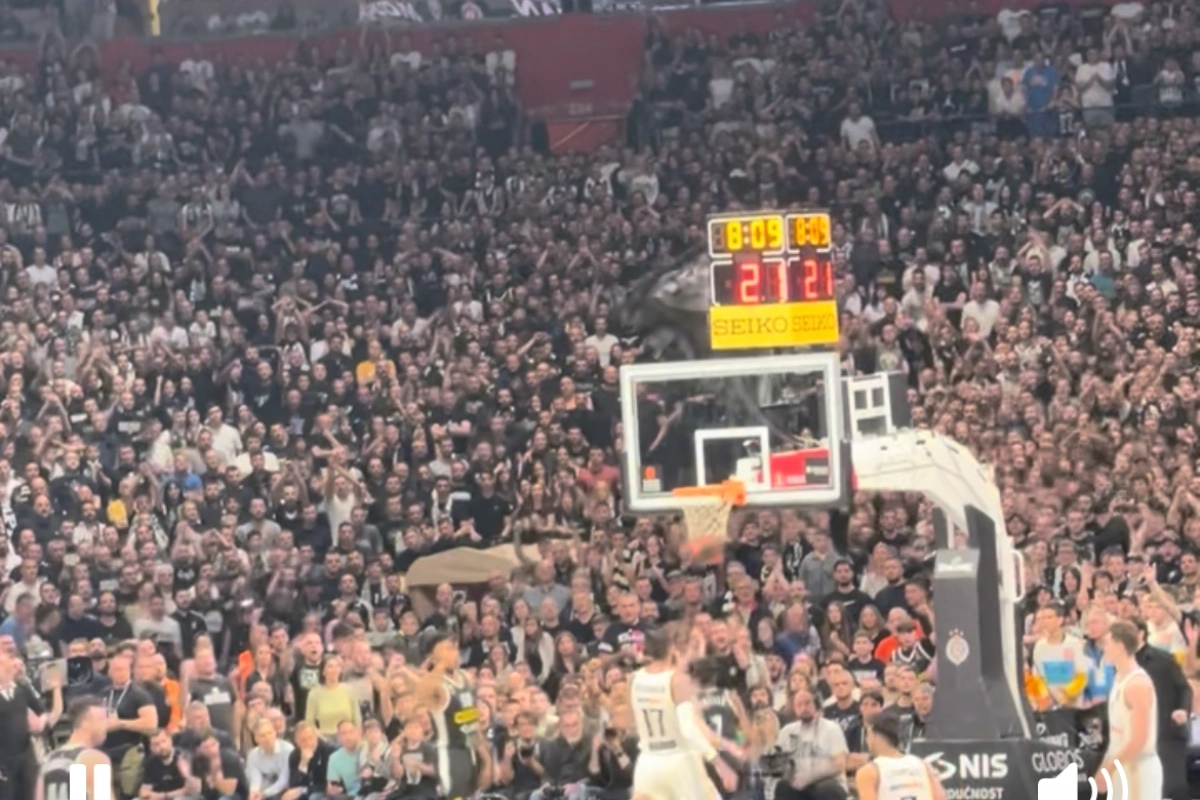
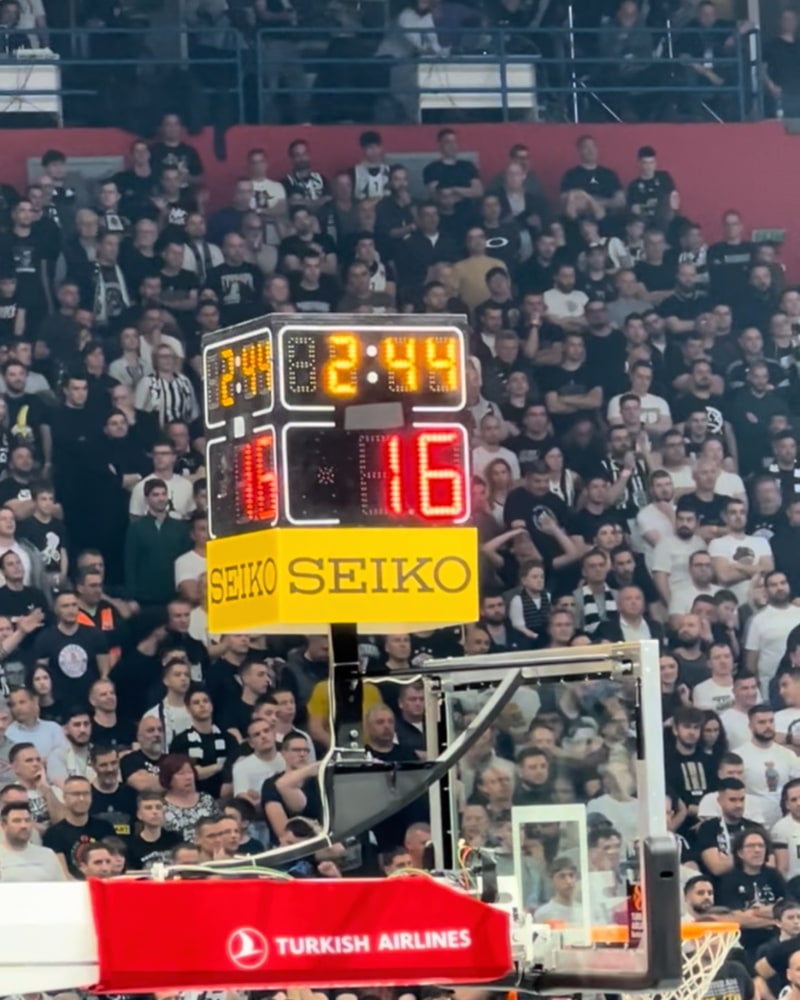
- It is always located directly on the basket, specifically on top of the backboard.
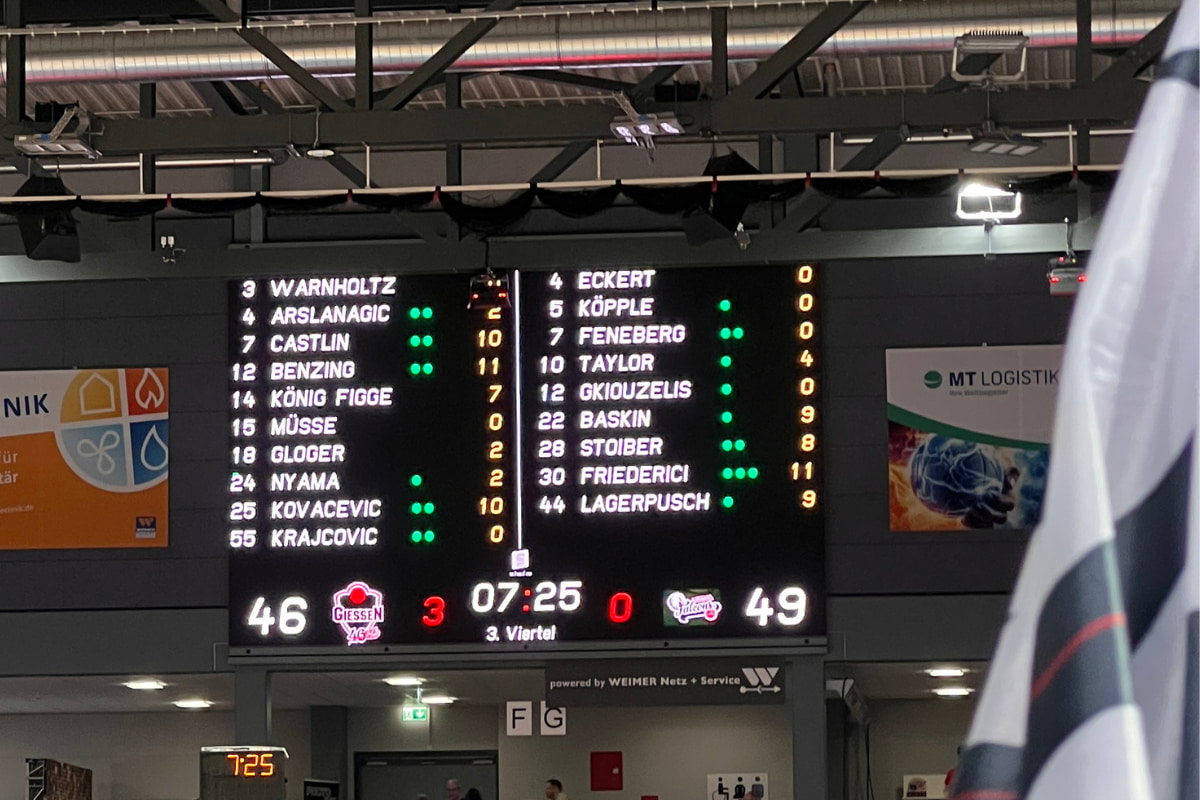
- Often, it is also visible on scoreboards in the corners of the court.
- It can also be found on the video cube (jumbotron) hanging above the center of the court.
There are always two identical clocks on each basket so that all players can see them clearly. These displays show both the shot clock and the remaining game time. The time for the attack is always displayed below the game time.