To understand what the differences are, we need to take a quick look at how a pompom is constructed.
The pom-pom anatomy: What is a pom-pom made of?
Each cheer pompom basically consists of two elements:
The grip: It determines how the pompom is held and how much control you have during fast movements (the so-called motions). There are classic grips (like a simple, straight stick) that only rest in the palm of your hand. And there are variants that look like small brass knuckles or elastic loops (loop or cheer handles). With these, you interlock your fingers directly in the handle for maximum control or to free your hands for stunts and throws at lightning speed without the pompom flying to the ground.
Streamers: This is the technical term for the individual fringes or plastic strips. They make the movements more visible to the audience. Streamers are available in various lengths, widths and materials – from classic matt and glossy to metallic or holographic effects that are extremely reflective under spotlights.
And it is precisely the combination of handle and streamers that separates the wheat from the chaff. You should know the following three types.
The three pompom types at a glance
Dowel or rooter pompoms
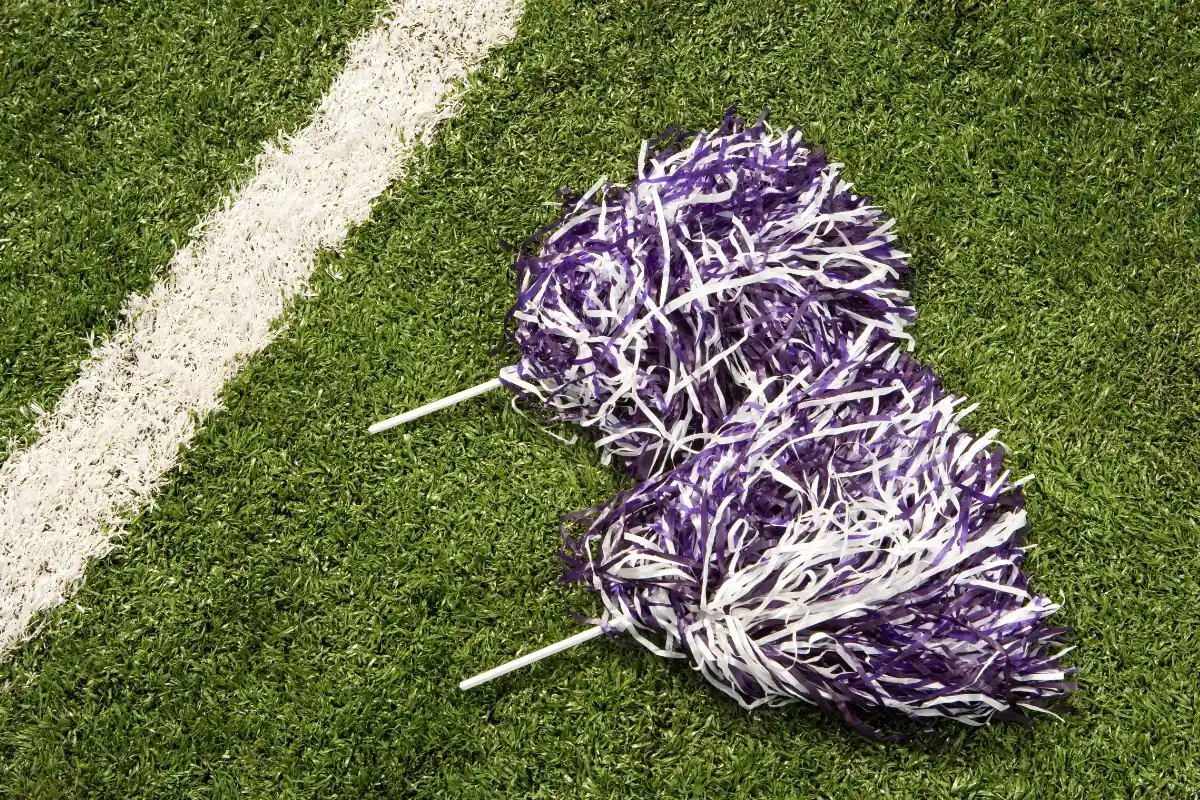
Dowel pompoms consist of a short, sturdy plastic or wooden stick with the fringes attached to one end (and therefore only sticking out to one side, like a mop). You hold the dowel directly by this handle fe This makes it extremely easy and safe to handle, even under pressure or during sweaty choreographies. This is why Dowel pompoms are widely used by beginner teams, schools and in training.
Pompoms are primarily distinguished by their handle, which is why they can have slightly different names depending on the supplier. Dowel pompoms are sometimes also called cape or peg handle pompoms.
Visually, this is the classic shape that you are familiar with from carnival costumes, for example. In professional cheerleading, the dowel pompom is of course of a much higher quality and has many more fringes.
By the way: when we talk about the very cheap version with extremely few fringes, the jargon is rooter poms. Rooter poms are not sports equipment, but pure fan giveaways or accessories for costumes.