What should I use to clean golf clubs?
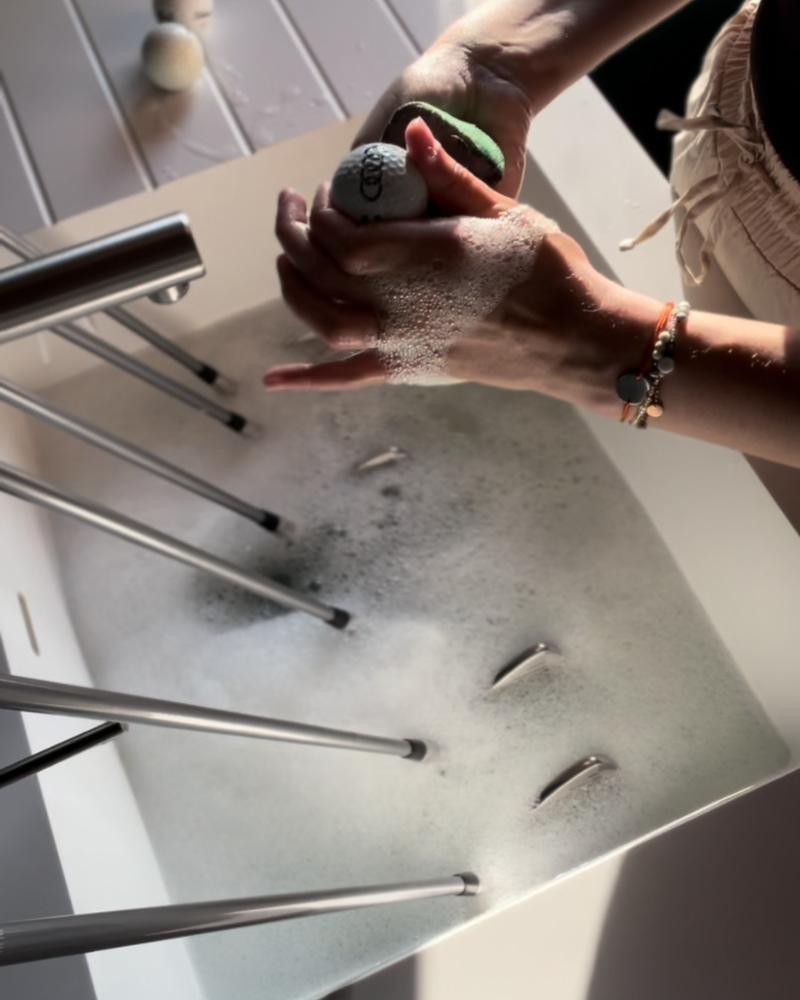
Fancy cleaning agents for golf clubs are often sold online, but you don’t actually need them. Warm water and a mild soap or dishwashing liquid are all you need. For heavy soiling, you can use a tee or an old toothbrush.
That’s all there is to it! No expensive chemicals or special equipment required.
How often should you clean your rackets?
- You should remove coarse dirt after every round. If your rackets get wet during play, you should also dry them immediately afterwards.
- If you play very regularly, it is worth giving your rackets a thorough rinse every week. For occasional players, it depends a little on how often you play – but it should be once a month.
- Also check your handles every month – they also need to be cleaned regularly.
- At the end of the season, it’s time to deep clean! To make your clubs ready for winter, you should clean them completely and thoroughly. Also check your clubs for damage. Clean your golf clubs properly: here’s how
How to clean your irons and wedges
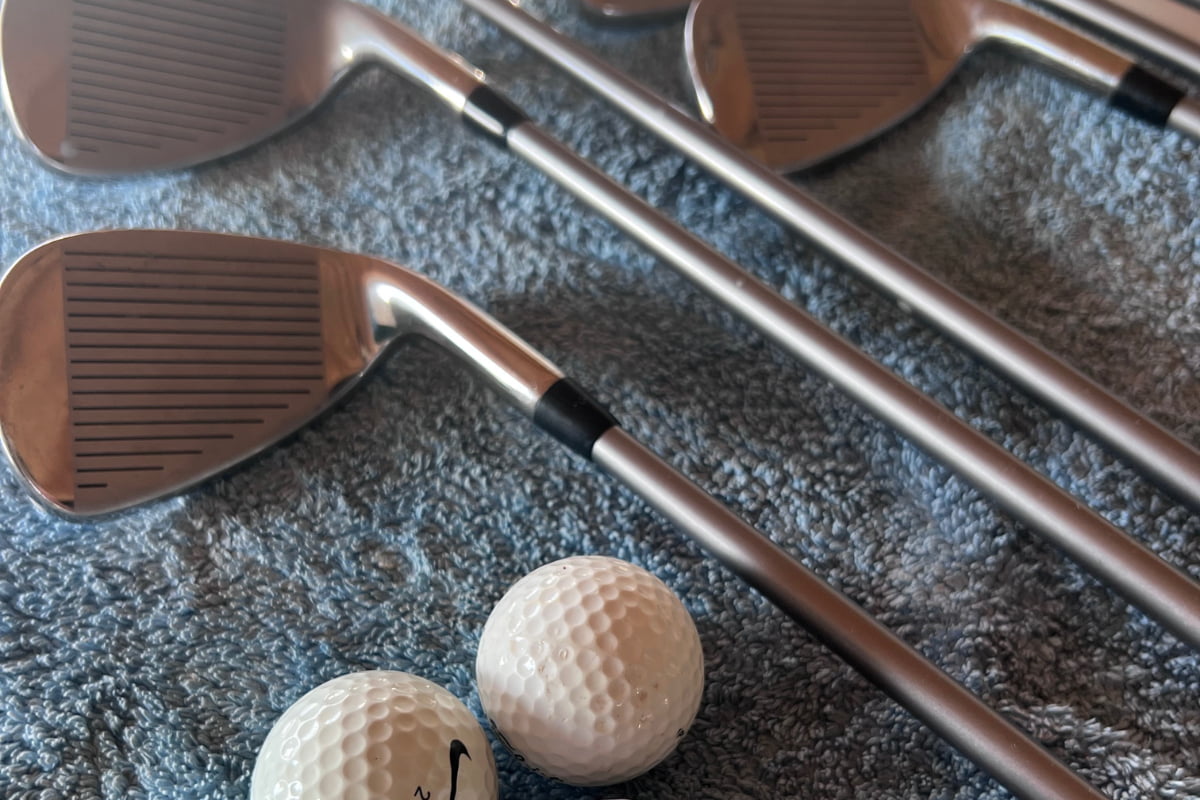
The first step is to carefully tap your rackets to remove coarse sand and clumps of soil. It is usually enough to simply rinse the clubs with a little water. For stubborn dirt, you can also soak your irons and wedges in a bowl of water and washing-up liquid for a few minutes.
Make sure that the water is not hot, otherwise the glue that connects the club head to the shaft could come loose. It is best to only immerse the dirty club head and never the whole club.
Use a soft brush or an old toothbrush to carefully scrub the striking surface clean. You should brush out the grooves (grooves) particularly thoroughly. This is where most of the dirt that affects your game collects. For dirt that is stuck in the grooves, use a tee or other pointed object to carefully scrape along the grooves – not across them, otherwise you will damage them.
Finally, rinse the sticks thoroughly with clean water and dry them immediately with a towel. Again, do not leave them damp, otherwise water can damage the glue.
Also pay attention to colored markings. Putters in particular often have lines on them that you could rub off if you rub too hard.
How to clean drivers and fairway woods properly
Wood is often made of more sensitive materials than iron. You should therefore be particularly careful here. Basically, however, you clean them in the same way as the other rackets. If you are unsure, you can also simply use a damp cloth for these rackets.
Clean handles: Often forgotten, but important
Yep, you should also clean your grips from time to time. Dirty grips give you less grip. Your hands slip more easily – this is particularly annoying if your hands are wet or sweaty.
It is best to clean your handles again with warm soapy water and a soft brush. For stubborn stains, a little alcohol on a cloth will help to get rid of them.
By the way: you can also replace your grips. And you should do this from time to time. Especially if they become shiny, cracked or you constantly have the feeling that the racket is slipping.