Bobsleigh, skeleton, luge: In all three, athletes race down an ice track on a sledge. And yet they are three completely different sports.
We’ll tell you what the differences are here.
What do all three have in common?
All three sports use a bobsleigh run – a prepared ice channel with bends, steep turns and a finish line at the bottom. The principle is always the same: as fast as possible from the top to the bottom. The difference lies in what you ride with, how you lie and how much control you actually have.
What is luge in sport?
Tobogganing is the closest thing to sledging from your childhood.
You ride on a very flat and simply built sledge. Either alone or in pairs.
When tobogganing, the athlete lies on their back with their feet pointing in the direction of travel. You steer with your body – by shifting your weight and applying light pressure to the runners. The sled is comparatively simple in design.
Skeleton: The slightly different form of tobogganing
Skeleton is basically also luge – but the other way around and therefore much more dangerous. It’s luge on steroids, so to speak.
The athlete lies prone on a flat sled with their head pointing in the direction of travel. This means you ride down the ice channel head first. Here, too, you steer solely by shifting your weight and shoulders. No steering, no brakes.
How bobsleighing differs from skeleton and luge
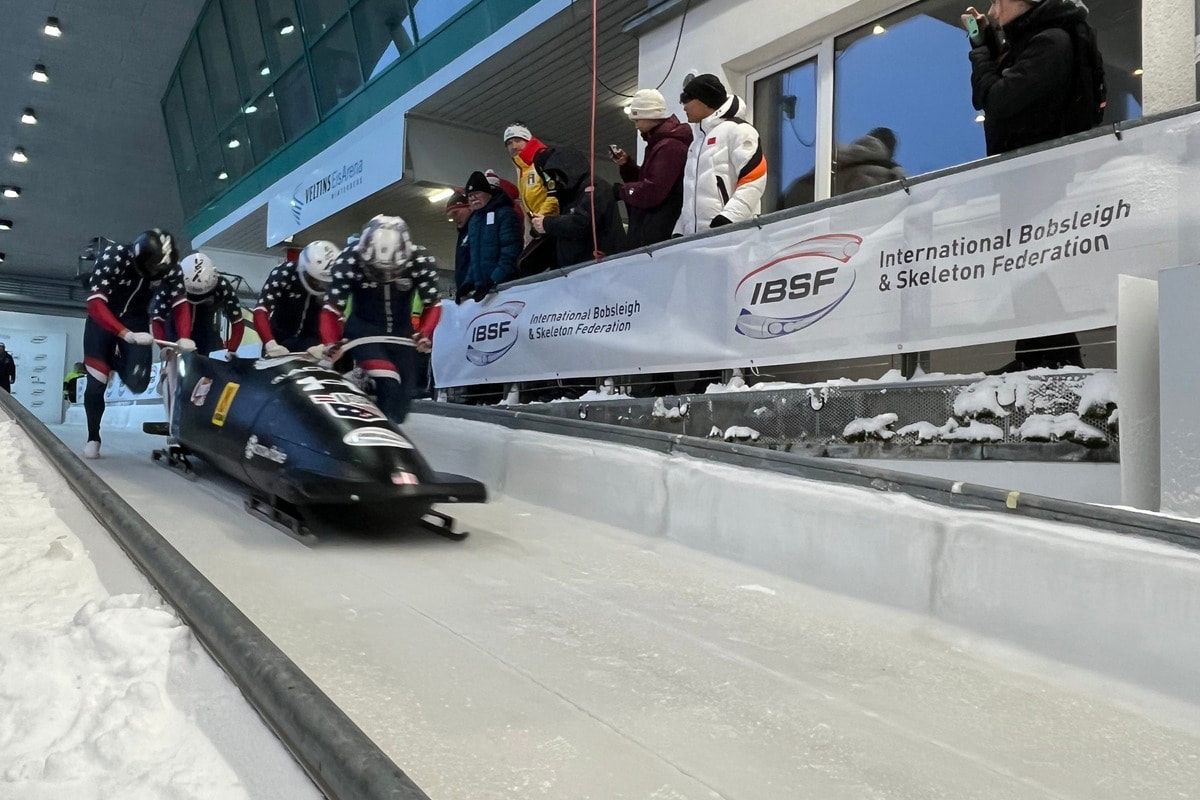
In the bobsleigh, the athletes sit upright in a closed vehicle – either two or four at a time. The whole thing no longer looks like a typical sled from the outside. More like a small torpedo with runners.
There is a real “steering wheel” with which the pilot can steer and thus determine the line through the bends. The start is a team effort: everyone pushes the bobsleigh, jumps in and ducks down. Then the pilot takes over. The bobsleigh is the fastest of the three machines and can reach speeds of over 150 km/h.